Wednesday, March 27, 2019

Stocks in the news: Bharti Airtel, Jet Airways, DLF, Indiabulls Real Estate, Titan, Future Retail, G

Here are the stocks which are in news today:

Indiabulls Real Estate: To raise Rs 600 crore Via NCDs

Titan Company: Appoints Pradyumna Rameshchandra Vyas as Independent Director of company

DCM: Sumant Bharat Ram resigns as Chief Executive & Financial Officer w.e.f March 31

related news Stocks in the news: TTK Prestige, Jet Airways, Max India, SBI, Bharat Gears, ONGC, Amber Enterprises Stocks in the news: Bajaj Auto, Infosys, Mindtree, DB Realty, Asian Oilfield, Jet Airways, PFC Stocks in the news: DLF, Centrum Capital, Fortis, Newgen Software, Muthoot Capital

ICICI Prudential: Prudential Corp to sell up to 2.6% stake via OFS; Floor Price set at Rs 300 per share

Suzlon Energy: Completes sale of Wind & Solar Subsidiaries

Jet Airways: Resolution plan - Conversion of Re 1 of Lenders' debt into 11.4 crore equity shares. Two nominees of promoter - Naresh Goyal and Anita Goyal, and one nominee of Etihad Airways PJSC to step down from the Board. Naresh Goyal to cease the be the Chairman of the company.

Grasim Industries: The Bombay High Court granted a stay against the recovery demand worth Rs 5,872.13 crore on account of dividend distribution tax.

Newgen Software Technologies: Company said it will incorporate Australian arm with an initial investment of 1.5 million Australian Dollars.

Bharti Airtel: Company said that it eliminated ISD Packs for making regular call to Bangladesh and Nepal. Prepaid user can make calls to Bangladesh at Rs 2.99 per minute and to Nepal at Rs 7.99 per minute.

DLF: Company said it will consider QIP issue price on March 28. QIP opens from March 25. The floor price for the issue is set at Rs 193.01 per share.

UCO Bank: Board approved preferential issue of 175 crore shares at Rs 19.01 each, against the government's capital infusion of Rs 3,330 crore.

Bank of Maharashtra: Shareholders approved issue of 15.5 crore equity shares at Rs 13.25 per share aggregating to Rs 205 crore to the central government.

Kalpataru Power Transmission: Company acquired 85 percent stake in a Swedish EPC Company for USD 24 million, which deals in power supply solutions and services.

Future Retail: Board approved the re-appointment of Kishore Biyani as the MD of the company and Rakesh Biyani as joint MD for a three years from May 2, respectively.

Tourism Finance Corporation: Appoints Anirban Chakraborty as CMD.

Prabhat Dairy: Competition Commission of India approved the scheme of the company's sale of its dairy business, which is run by the company's arm Sunfresh Agro Industries to Tirumala Milk Products.

NHPC: Company said that it had started power trading in IEX as trader for J&K Power Development Department with effect from March 22.

MEP Infra Developers: Company arm entered into concession agreements with NHAI for three highway projects in Maharashtra.

Aurionpro Solutions: Board approves the buyback of 10.8 lakh shares or 4.6 percent of equity capital at a price of Rs 185 per share aggregating to Rs 20 crore.

Piramal Enterprises: Company gets tentative US FDA nod for Antipsychotic Drug, Lurasidone Hydrochloride First Published on Mar 26, 2019 08:14 am

Monday, March 25, 2019

Prepare To Take Gold Profits

&l;p&g;&l;img class=&q;dam-image bloomberg size-large wp-image-43358661&q; src=&q;https://specials-images.forbesimg.com/dam/imageserve/43358661/960x0.jpg?fit=scale&q; data-height=&q;640&q; data-width=&q;960&q;&g; Photocredit: &a;copy; 2019 Bloomberg Finance LP

&l;p class=&q;tweet_line&q;&g;Gold is due for an early April high.&l;/p&g;

This analysis begins with the monthly histogram of gold from 1969. The histogram bars represent the expected return in each month. Note that the yellow metal is in the weaker part of its seasonal period

Chart 1: Monthly Expected Return- Gold

&l;img class=&q;size-full wp-image-193198&q; src=&q;http://blogs-images.forbes.com/greatspeculations/files/2019/03/GOLD-1.jpg?width=960&q; alt=&q;&q; data-height=&q;274&q; data-width=&q;1132&q;&g; This seasonality histogram shows that gold is in its weaker period.

Both the weekly and the monthly cycles are peaking in the first week of April. All three of the monthly sell signals have led to lower prices in the past twelve months. Six of eight weekly sell signals have been successful in the last year.

Chart 2: Gold Monthly Cycle

&l;img class=&q;size-large wp-image-193199&q; src=&q;http://blogs-images.forbes.com/greatspeculations/files/2019/03/GOLD-2-1200x322.jpg?width=960&q; alt=&q;&q; data-height=&q;322&q; data-width=&q;1200&q;&g; The weekly gold cycle will peak.

Chart 3: Gold Weekly Cycle

&l;img class=&q;size-large wp-image-193200&q; src=&q;http://blogs-images.forbes.com/greatspeculations/files/2019/03/GOLD-3-1200x329.jpg?width=960&q; alt=&q;&q; data-height=&q;329&q; data-width=&q;1200&q;&g; The monthly cycle also hits a high.

With the cycle peaks only a week away, there should be some technical evidence of coming weakness and we do detect this below. Note that gold has made higher price highs as momentum has made lower highs, a bearish divergence. The $1260 area is a reasonable downside target.

If gold ends February with a gain as it did, the probability of higher prices in April is 56% versus 39% if it does not. If March closes on the upside, the odds of a higher market in April are 60% versus 44% if gold closes the month on the downside. At present, gold is down about $1 in March, but only needs to add more than a buck in the coming week to trigger the better odds.

Chart 4: Daily Gold

&l;img class=&q;size-large wp-image-193201&q; src=&q;http://blogs-images.forbes.com/greatspeculations/files/2019/03/GOLD-4-1200x339.jpg?width=960&q; alt=&q;&q; data-height=&q;339&q; data-width=&q;1200&q;&g; This daily graph shows a loss of momentum as price has risen.

&a;nbsp;

&a;nbsp;

&a;nbsp;

&a;nbsp;

&a;nbsp;

&a;nbsp;

&a;nbsp;&l;/p&g;

Friday, March 15, 2019

Polar Capital LLP Has $67.97 Million Stake in Suncor Energy Inc. (SU)

Polar Capital LLP lessened its stake in shares of Suncor Energy Inc. (NYSE:SU) (TSE:SU) by 21.3% in the fourth quarter, according to the company in its most recent Form 13F filing with the SEC. The firm owned 1,998,048 shares of the oil and gas producer’s stock after selling 541,874 shares during the quarter. Polar Capital LLP owned approximately 0.13% of Suncor Energy worth $67,965,000 at the end of the most recent quarter.

Several other large investors also recently added to or reduced their stakes in SU. First Manhattan Co. lifted its stake in Suncor Energy by 64.8% in the fourth quarter. First Manhattan Co. now owns 37,782 shares of the oil and gas producer’s stock worth $1,056,000 after acquiring an additional 14,856 shares during the period. Captrust Financial Advisors increased its holdings in shares of Suncor Energy by 184.4% during the third quarter. Captrust Financial Advisors now owns 17,626 shares of the oil and gas producer’s stock valued at $682,000 after acquiring an additional 11,429 shares in the last quarter. Marshall Wace LLP bought a new position in shares of Suncor Energy during the third quarter valued at $1,576,000. Morgan Stanley increased its holdings in shares of Suncor Energy by 23.1% during the third quarter. Morgan Stanley now owns 3,400,893 shares of the oil and gas producer’s stock valued at $131,579,000 after acquiring an additional 637,520 shares in the last quarter. Finally, Legacy Bridge LLC bought a new position in shares of Suncor Energy during the fourth quarter valued at $27,000. 66.63% of the stock is owned by hedge funds and other institutional investors.

Get Suncor Energy alerts:

Several equities analysts have recently weighed in on SU shares. Zacks Investment Research restated a “hold” rating on shares of Suncor Energy in a report on Friday, November 16th. Canaccord Genuity set a $65.00 price target on Suncor Energy and gave the company a “buy” rating in a report on Tuesday, November 20th. Mizuho restated an “average” rating and set a $52.00 price target on shares of Suncor Energy in a report on Monday, December 3rd. Macquarie downgraded Suncor Energy from an “outperform” rating to a “neutral” rating and set a $46.00 price target for the company. in a report on Tuesday, December 4th. Finally, GMP Securities downgraded Suncor Energy from a “buy” rating to a “hold” rating in a report on Thursday, December 13th. One analyst has rated the stock with a sell rating, five have given a hold rating and eleven have assigned a buy rating to the stock. The stock currently has an average rating of “Buy” and a consensus target price of $49.12.

NYSE SU opened at $33.46 on Wednesday. Suncor Energy Inc. has a one year low of $25.81 and a one year high of $42.55. The stock has a market capitalization of $53.03 billion, a P/E ratio of 16.73, a price-to-earnings-growth ratio of 2.04 and a beta of 1.14. The company has a quick ratio of 0.54, a current ratio of 0.84 and a debt-to-equity ratio of 0.32.

Suncor Energy (NYSE:SU) (TSE:SU) last released its quarterly earnings data on Tuesday, February 5th. The oil and gas producer reported $0.27 EPS for the quarter, missing the consensus estimate of $0.38 by ($0.11). Suncor Energy had a return on equity of 9.50% and a net margin of 8.48%. The business had revenue of $6.77 billion during the quarter, compared to the consensus estimate of $8.13 billion. On average, sell-side analysts expect that Suncor Energy Inc. will post 1.83 EPS for the current year.

The firm also recently disclosed a quarterly dividend, which will be paid on Monday, March 25th. Investors of record on Monday, March 4th will be issued a $0.32 dividend. This represents a $1.28 annualized dividend and a yield of 3.83%. This is an increase from Suncor Energy’s previous quarterly dividend of $0.27. The ex-dividend date of this dividend is Friday, March 1st. Suncor Energy’s dividend payout ratio (DPR) is presently 54.00%.

TRADEMARK VIOLATION NOTICE: “Polar Capital LLP Has $67.97 Million Stake in Suncor Energy Inc. (SU)” was first reported by Ticker Report and is the sole property of of Ticker Report. If you are reading this report on another website, it was copied illegally and reposted in violation of US & international trademark & copyright laws. The correct version of this report can be read at https://www.tickerreport.com/banking-finance/4218874/polar-capital-llp-has-67-97-million-stake-in-suncor-energy-inc-su.html.

Suncor Energy Profile

Suncor Energy Inc operates as an integrated energy company. The company primarily focuses on developing petroleum resource basins in Canada's Athabasca oil sands; explores, acquires, develops, produces, and markets crude oil and natural gas in Canada and internationally; transports and refines crude oil; markets petroleum and petrochemical products primarily in Canada.

See Also: What are different types of coverage ratios?

Want to see what other hedge funds are holding SU? Visit HoldingsChannel.com to get the latest 13F filings and insider trades for Suncor Energy Inc. (NYSE:SU) (TSE:SU).

Institutional Ownership by Quarter for Suncor Energy (NYSE:SU)

Thursday, March 14, 2019

GMO salmon could hit stores as early as 2020

Genetically engineered salmon is swimming your way.

The U.S. Food and Drug Administration is now allowing this kind of fish, whose DNA has been altered to speed up growth, and its eggs into the U.S.

The announcement means that AquaBounty Technologies may import AquAdvantage Salmon eggs to its facility near Albany, Indiana, where the fish grow faster than traditional Atlantic salmon.

AquAdvantage Salmon could hit store shelves by 2020, said the company. It declined to discuss what the cost will be.

"We will sell our salmon at market prices, so it is too far away to know what that will be. We will not sell at a discount," AquaBounty said.

Genetically engineered salmon is coming to stores as soon as next year. (Photo: Westend61, Getty Images/Westend61)

Oink, oink: There are now 'low fat' pigs, thanks to science

Forget chicken: Chick-fil-A serves up fish sandwiches for Lent, now through April 20

AquAdvantage Salmon, what critics deride as Frankenfish, is the only genetically-engineered animal for food use that has FDA approval, the agency said. The FDA first determined this fish was safe for human consumption in 2015.

"The FDA is committed to supporting innovation and ensuring safety in the biotechnology space, including the use of (intentional genomic alterations) in animals," FDA Commissioner Scott Gottlieb said in a statement. "We're interested in the promise that newer technologies can have for bringing innovative products, such as these, to market while also helping to ensure they are safe and effective."

In its research four years ago, the FDA also determined that the genetic engineering is safe for the animal and that the product would have no significant impact on the environment.

Fueled by more availability due to fish farming and an increased focus on eating healthy, fish consumption overall worldwide is on the rise, experts say.

"Approximately 350,000 tons of Atlantic salmon are consumed in the United States with more than 95 percent of it imported," AquaBounty said in a statement. "FDA's actions will allow for production and sale to begin here in the U.S., bringing opportunity for investment in rural America, creating American jobs, while also reducing dependence on seafood imports."

AquaBounty Technologies plans to farm AquAdvantage Salmon at its facility near Albany, Indiana. (Photo: AquaBounty Technologies)

Salmon is big business in the U.S., according to the National Oceanic and Atmospheric Administration. It's the country's highest-value commercial species at $688 million, compared to $610 million for crabs, $594 million for lobsters and $531 million for shrimp.

NOAA also found that In the U.S., the estimated per capita consumption of fish and shellfish was 16.0 pounds in 2017, up 14.9 pounds in 2016 – and the highest consumption level since 2009.

AquAdvantage Salmon grows faster than traditional Atlantic salmon, using the growth hormone gene from Chinook salmon and some DNA from a fish called the ocean pout, according to the FDA. That enables the fish to reach sellable size more quickly than how Mother Nature does it.

How popular is your car? These car models from BMW to Mercedes to Toyota take forever to sell on dealers' lots

A happy ending: Photo of sad dad trying to sell donuts goes viral, and a sweet Twitter moment is born

NEWSLETTERSGet the Managing Your Money newsletter delivered to your inboxWe're sorry, but something went wrongA collection of articles to help you manage your finances like a pro.Please try again soon, or contact Customer Service at 1-800-872-0001.Delivery: FriInvalid email addressThank you! You're almost signed up for Managing Your MoneyKeep an eye out for an email to confirm your newsletter registration.More newsletters

"I think the GMO salmon are safe to eat, but are they cheaper and do they taste better than other farmed salmon? Otherwise, why bother?," said Marion Nestle, professor emerita of nutrition, food studies and public health at New York University. "I hope the GMO salmon are being raised inland with no possibility of their escaping into the oceans. It's best to keep wild salmon populations away from them."

The International Salmon Farmers Association said there's "probably nothing" wrong with genetically engineered salmon, but fears how the public will perceive this type of fish -- and what that will do to the industry as a whole.

"It will destroy the reputation of the salmon. This is not good PR for the salmon business. It's considered Frankenstein fish," said president Trond Davidsen. "If you're being rational, that's not the case, but that's the image that's already been produced."

Maynard, Massachusetts-based AquaBounty Technologies was founded in 1991, according to its website. 

CLOSE

The secret is that it's actually super easy. Buzz60

Follow USA TODAY reporter Zlati Meyer on Twitter: @ZlatiMeyer


Wednesday, March 13, 2019

Why Amazon Stock Remains a Strong Long-Term Bet

Investors often seek companies that disrupt how the world does things because they usually are game changer. Amazon (NASDAQ:AMZN) is the one that has done that the best. For over a decade, AMZN has completely changed the status quo of several industries.

Why Amazon Stock Remains a Strong Long-Term BetWhy Amazon Stock Remains a Strong Long-Term BetSource: Shutterstock

For example, the retail sector as we knew it will never be the same. Giants like Macy’s (NYSE:M) and Target (NYSE:TGT) have been trying for years to solve the AMZN riddle but are still falling short. One thing is for certain: They are all trying to emulate AMZN, but most are falling short … so far.

But while all of this is happening in retail, Amazon has also disrupted many other industries. The sheer rumor of AMZN entering a business causes immediate dumps of those stocks in it. This happened to drug stores, and transportation companies like Fedex (NYSE:FDX).

Under the incredible leadership of its founder Jeff Bezos, AMZN also invented new sources of income and took the world by surprise. Most notable was AMZN’s foray into the online services and as a result, it is now the dominant force in the infrastructure that we know as the cloud.

In summary, this is a company that has never stopped from growing. I consider it the perpetual startup company. So for years, Amazon has left a pile of financial ruins of those who tried to short the stock.

For a long time, the experts wrongly insisted that Amazon stock was expensive because of its thin margins. But their mistake was to evaluate it from a profitably perspective.

When I evaluate a hyper-growth corporation, I don’t require it to be profitable. AMZN needed to spend in order to grow as fast as it did. If I cover up the name, I’d consider it still a startup but one that actually generates its own cash to burn where it needs it.

Well, now that AMZN is more in control of its margins, that argument is gone. Unless the financial markets collapse, I have no doubt that for the long-term Amazon stock will be higher in the future. So from that perspective, it is not important to time the entry into AMZN stock.

But since it’s not cheap to own the shares when they cost $1,625, then it would be best to choose decent levels to start a position and not to lock up a giant pile of cash into a trade at risk.


Compare Brokers
How to Approach Amazon Stock Now

Fundamentally, AMZN stock sells at a trailing price-to-earnings ratio of 82. While that sounds expensive, it’s not extravagant. This is a company that has always demanded a high valuation and it has always earned it. Yes, its P/E is more expensive than Apple (NASDAQ:AAPL), Alphabet (NASDAQ:GOOG, NASDAQ:GOOGL) and Facebook (NASDAQ:FB) combined, but it’s still 20% cheaper than Chipotle (NYSE:CMG) stock.

Technically, AMZN stock is a momentum stock so it moves fast in both directions. The scoreboard suggests that holding it through the eventual dips pays off. Less than two years ago, buying the dip to $800 was risky, yet here it is more than double that.

For the short term, there is risk under $1,550. If the bears can push prices below it, they could invite momentum sellers to retest recent lows from last year. But there should be some support around $1,440 per share. Besides, for that to happen there will also need to be a market-wide correction in equities. Meaning AMZN alone won’t likely correct while stocks are rising.

Conversely, if the bulls can slog up through this resistance zone and overcome $1,710 per share, it can trigger a bullish pattern that would target the $1,810 area. This would be a tough spot from early December. Those tend to be resistance on the way up, but they also provide catalysts for bulls.

It is important to note that the sentiment on Wall Street has soured a bit. We have politicians playing whack-a-mole with the headlines. And we have a Federal Reserve that won’t shut up. Just this weekend the sitting Chairman found it appropriate to do a television interview and more public appearances scheduled. So headline risk is high and it could cause more equity market selloffs that will take down all stocks, including Amazon stock, but in the long run, those too would pass.

Nicolas Chahine is the managing director of SellSpreads.com. As of this writing, he did not hold a position in any of the aforementioned securities. You can follow him as @racernic on Twitter and 

Tuesday, March 12, 2019

Ultragenyx Pharmaceutical (RARE) Downgraded to Hold at BidaskClub

BidaskClub downgraded shares of Ultragenyx Pharmaceutical (NASDAQ:RARE) from a buy rating to a hold rating in a report released on Wednesday morning.

Several other research firms also recently commented on RARE. Wedbush reissued an outperform rating and set a $88.00 price objective on shares of Ultragenyx Pharmaceutical in a report on Monday, January 7th. Cowen reissued a buy rating and set a $69.00 price objective on shares of Ultragenyx Pharmaceutical in a report on Tuesday, February 26th. Zacks Investment Research raised shares of Ultragenyx Pharmaceutical from a hold rating to a buy rating and set a $51.00 price objective for the company in a report on Wednesday, December 12th. Raymond James reissued an outperform rating and set a $80.00 price objective on shares of Ultragenyx Pharmaceutical in a report on Friday, February 22nd. Finally, Credit Suisse Group reissued a hold rating and set a $59.00 price objective on shares of Ultragenyx Pharmaceutical in a report on Wednesday, February 20th. Seven equities research analysts have rated the stock with a hold rating, thirteen have given a buy rating and one has issued a strong buy rating to the company’s stock. The stock has an average rating of Buy and a consensus price target of $76.16.

Get Ultragenyx Pharmaceutical alerts:

RARE opened at $62.78 on Wednesday. Ultragenyx Pharmaceutical has a 52 week low of $37.44 and a 52 week high of $90.98. The stock has a market cap of $3.22 billion, a price-to-earnings ratio of -8.50 and a beta of 2.26.

Ultragenyx Pharmaceutical (NASDAQ:RARE) last released its quarterly earnings data on Tuesday, February 19th. The biopharmaceutical company reported ($1.73) EPS for the quarter, beating the consensus estimate of ($1.74) by $0.01. Ultragenyx Pharmaceutical had a negative net margin of 383.75% and a negative return on equity of 35.26%. The business had revenue of $16.26 million during the quarter, compared to the consensus estimate of $13.30 million. On average, equities research analysts forecast that Ultragenyx Pharmaceutical will post -6.82 earnings per share for the current fiscal year.

Several large investors have recently made changes to their positions in the stock. Capital Research Global Investors lifted its holdings in shares of Ultragenyx Pharmaceutical by 1.7% in the 3rd quarter. Capital Research Global Investors now owns 5,856,138 shares of the biopharmaceutical company’s stock valued at $447,058,000 after acquiring an additional 100,575 shares during the last quarter. BlackRock Inc. lifted its holdings in shares of Ultragenyx Pharmaceutical by 2.8% in the 4th quarter. BlackRock Inc. now owns 4,476,812 shares of the biopharmaceutical company’s stock valued at $194,652,000 after acquiring an additional 123,409 shares during the last quarter. Capital International Investors lifted its holdings in shares of Ultragenyx Pharmaceutical by 20.9% in the 3rd quarter. Capital International Investors now owns 4,359,891 shares of the biopharmaceutical company’s stock valued at $332,834,000 after acquiring an additional 755,127 shares during the last quarter. Federated Investors Inc. PA lifted its holdings in shares of Ultragenyx Pharmaceutical by 4.7% in the 3rd quarter. Federated Investors Inc. PA now owns 1,484,271 shares of the biopharmaceutical company’s stock valued at $113,309,000 after acquiring an additional 66,720 shares during the last quarter. Finally, First Trust Advisors LP lifted its holdings in shares of Ultragenyx Pharmaceutical by 16.5% in the 4th quarter. First Trust Advisors LP now owns 1,471,934 shares of the biopharmaceutical company’s stock valued at $64,000,000 after acquiring an additional 208,468 shares during the last quarter. 98.35% of the stock is owned by hedge funds and other institutional investors.

About Ultragenyx Pharmaceutical

Ultragenyx Pharmaceutical Inc, a biopharmaceutical company, focuses on the identification, acquisition, development, and commercialization of various products for the treatment of rare and ultra-rare genetic diseases in the United States. Its biologics product candidate includes Mepsevii, an enzyme replacement therapy for the treatment of children and adults with Mucopolysaccharidosis VII.

Recommended Story: Price-Sales Ratio

Analyst Recommendations for Ultragenyx Pharmaceutical (NASDAQ:RARE)

Monday, March 11, 2019

Sangamo Therapeutics Inc (SGMO) Expected to Post FY2019 Earnings of ($1.35) Per Share

Sangamo Therapeutics Inc (NASDAQ:SGMO) – Equities research analysts at Jefferies Financial Group dropped their FY2019 earnings per share estimates for shares of Sangamo Therapeutics in a research note issued on Monday, March 4th. Jefferies Financial Group analyst M. Raycroft now forecasts that the biopharmaceutical company will post earnings of ($1.35) per share for the year, down from their previous forecast of ($0.72). Jefferies Financial Group also issued estimates for Sangamo Therapeutics’ FY2020 earnings at ($0.19) EPS, FY2021 earnings at ($1.53) EPS and FY2022 earnings at ($0.38) EPS.

Get Sangamo Therapeutics alerts:

Several other equities research analysts have also commented on SGMO. ValuEngine upgraded shares of Sangamo Therapeutics from a “sell” rating to a “hold” rating in a research note on Friday, March 1st. BidaskClub downgraded shares of Sangamo Therapeutics from a “buy” rating to a “hold” rating in a research report on Tuesday, November 13th. Zacks Investment Research downgraded shares of Sangamo Therapeutics from a “hold” rating to a “sell” rating in a research report on Friday, January 18th. Wedbush set a $11.00 target price on shares of Sangamo Therapeutics and gave the company a “hold” rating in a research report on Monday, November 19th. Finally, JPMorgan Chase & Co. downgraded shares of Sangamo Therapeutics from an “overweight” rating to a “neutral” rating and reduced their target price for the company from $35.00 to $11.00 in a research report on Wednesday, November 14th. One investment analyst has rated the stock with a sell rating, four have issued a hold rating, two have given a buy rating and one has issued a strong buy rating to the company’s stock. The stock currently has an average rating of “Hold” and an average target price of $16.60.

NASDAQ:SGMO opened at $9.70 on Thursday. The company has a quick ratio of 6.32, a current ratio of 6.32 and a debt-to-equity ratio of 0.07. The stock has a market capitalization of $901.48 million, a price-to-earnings ratio of -13.86 and a beta of 2.84. Sangamo Therapeutics has a 52 week low of $6.26 and a 52 week high of $26.90.

Institutional investors and hedge funds have recently added to or reduced their stakes in the stock. Advisors Asset Management Inc. grew its stake in Sangamo Therapeutics by 305.3% in the second quarter. Advisors Asset Management Inc. now owns 21,187 shares of the biopharmaceutical company’s stock valued at $301,000 after purchasing an additional 15,960 shares in the last quarter. Russell Investments Group Ltd. grew its stake in Sangamo Therapeutics by 194.9% in the third quarter. Russell Investments Group Ltd. now owns 105,894 shares of the biopharmaceutical company’s stock valued at $1,795,000 after purchasing an additional 69,984 shares in the last quarter. Private Advisor Group LLC purchased a new position in Sangamo Therapeutics in the third quarter valued at about $245,000. Wells Fargo & Company MN grew its stake in Sangamo Therapeutics by 12.7% in the third quarter. Wells Fargo & Company MN now owns 890,234 shares of the biopharmaceutical company’s stock valued at $15,089,000 after purchasing an additional 100,253 shares in the last quarter. Finally, Cambridge Investment Research Advisors Inc. purchased a new position in Sangamo Therapeutics in the third quarter valued at about $182,000. 62.46% of the stock is owned by institutional investors.

In other news, VP Edward R. Conner sold 5,000 shares of the stock in a transaction that occurred on Monday, January 7th. The shares were sold at an average price of $12.33, for a total transaction of $61,650.00. The transaction was disclosed in a filing with the Securities & Exchange Commission, which is available through this link. Insiders have sold a total of 20,000 shares of company stock valued at $224,050 over the last three months. Insiders own 1.20% of the company’s stock.

Sangamo Therapeutics Company Profile

Sangamo Therapeutics, Inc focuses on translating science into genomic therapies that transform patients' lives using platform technologies in genome editing, gene therapy, gene regulation, and cell therapy. The company's zinc finger DNA-binding protein (ZFP) technology enables specific genome editing and gene regulation.

See Also: How Does the Quiet Period Work?

Earnings History and Estimates for Sangamo Therapeutics (NASDAQ:SGMO)

Sunday, March 10, 2019

iTicoin (ITI) Reaches One Day Volume of $0.00

iTicoin (CURRENCY:ITI) traded flat against the dollar during the 1 day period ending at 19:00 PM ET on March 8th. iTicoin has a market capitalization of $50,828.00 and approximately $0.00 worth of iTicoin was traded on exchanges in the last day. One iTicoin coin can now be purchased for about $1.59 or 0.00043403 BTC on cryptocurrency exchanges including Cryptopia and BTC-Alpha. During the last seven days, iTicoin has traded flat against the dollar.

Here’s how related cryptocurrencies have performed during the last day:

Get iTicoin alerts: XRP (XRP) traded down 1.7% against the dollar and now trades at $0.31 or 0.00007926 BTC. Tether (USDT) traded down 0.2% against the dollar and now trades at $1.01 or 0.00025801 BTC. Binance Coin (BNB) traded 6.1% lower against the dollar and now trades at $14.19 or 0.00363230 BTC. Stellar (XLM) traded up 1.5% against the dollar and now trades at $0.0870 or 0.00002228 BTC. TRON (TRX) traded down 2.7% against the dollar and now trades at $0.0225 or 0.00000577 BTC. Bitcoin SV (BSV) traded 3% lower against the dollar and now trades at $65.86 or 0.01686528 BTC. NEO (NEO) traded down 3.8% against the dollar and now trades at $8.90 or 0.00227828 BTC. Basic Attention Token (BAT) traded up 10.4% against the dollar and now trades at $0.20 or 0.00005148 BTC. VeChain (VET) traded down 2% against the dollar and now trades at $0.0044 or 0.00000113 BTC. TrueUSD (TUSD) traded down 0.1% against the dollar and now trades at $1.01 or 0.00025953 BTC.

About iTicoin

iTicoin’s total supply is 9,999,992 coins and its circulating supply is 32,000 coins. iTicoin’s official website is iticoin.com.

Buying and Selling iTicoin

iTicoin can be traded on these cryptocurrency exchanges: Cryptopia and BTC-Alpha. It is usually not presently possible to purchase alternative cryptocurrencies such as iTicoin directly using U.S. dollars. Investors seeking to trade iTicoin should first purchase Ethereum or Bitcoin using an exchange that deals in U.S. dollars such as Coinbase, GDAX or Gemini. Investors can then use their newly-acquired Ethereum or Bitcoin to purchase iTicoin using one of the exchanges listed above.

new TradingView.widget({ “height”: 400, “width”: 650, “symbol”: “ITIUSD”, “interval”: “D”, “timezone”: “Etc/UTC”, “theme”: “White”, “style”: “1”, “locale”: “en”, “toolbar_bg”: “#f1f3f6”, “enable_publishing”: false, “hideideas”: true, “referral_id”: “2588”});

Friday, March 8, 2019

Primo Water Corp (PRMW) Files 10-K for the Fiscal Year Ended on December 31, 2018

Primo Water Corp (NASDAQ:PRMW) files its latest 10-K with SEC for the fiscal year ended on December 31, 2018. Primo Water Corp is a provider of multi-gallon purified bottled water, self-service refill water and water dispensers sold through retailers in the United States and Canada. Primo Water Corp has a market cap of $583.040 million; its shares were traded at around $15.13 with and P/S ratio of 1.83.

For the last quarter Primo Water Corp reported a revenue of $70.9 million, compared with the revenue of $68.31 million during the same period a year ago. For the latest fiscal year the company reported a revenue of $302.1 million, an increase of 5.6% from last year. For the last five years Primo Water Corp had an average revenue growth rate of 29.6% a year.

The reported loss per diluted share was $1.47 for the year, compared with the loss per share of $0.07 in the previous year. The Primo Water Corp had an operating margin of 8.88%, compared with the operating margin of 4.87% a year before. The 10-year historical median operating margin of Primo Water Corp is -6.23%. The profitability rank of the company is 5 (out of 10).

At the end of the fiscal year, Primo Water Corp has the cash and cash equivalents of $7.30 million, compared with $5.59 million in the previous year. The long term debt was $179.0 million, compared with $269.8 million in the previous year. Primo Water Corp has a financial strength rank of 4 (out of 10).

At the current stock price of $15.13, Primo Water Corp is traded at 41.3% premium to its historical median P/S valuation band of $10.71. The P/S ratio of the stock is 1.83, while the historical median P/S ratio is 1.30. The stock gained 16.92% during the past 12 months.

For the complete 20-year historical financial data of PRMW, click here.

Thursday, March 7, 2019

FDx Advisors Inc. Takes Position in Encana Corp (ECA)

FDx Advisors Inc. acquired a new position in shares of Encana Corp (NYSE:ECA) (TSE:ECA) in the fourth quarter, Holdings Channel reports. The institutional investor acquired 10,768 shares of the oil and gas company’s stock, valued at approximately $62,000.

A number of other institutional investors and hedge funds also recently modified their holdings of the business. BlackRock Inc. increased its holdings in Encana by 24.5% during the 3rd quarter. BlackRock Inc. now owns 27,563,490 shares of the oil and gas company’s stock worth $361,359,000 after purchasing an additional 5,428,023 shares in the last quarter. Vanguard Group Inc. increased its holdings in Encana by 2.2% during the 3rd quarter. Vanguard Group Inc. now owns 26,398,158 shares of the oil and gas company’s stock worth $346,081,000 after purchasing an additional 561,436 shares in the last quarter. Vanguard Group Inc increased its holdings in Encana by 2.2% during the 3rd quarter. Vanguard Group Inc now owns 26,398,158 shares of the oil and gas company’s stock worth $346,081,000 after purchasing an additional 561,436 shares in the last quarter. Mackenzie Financial Corp increased its holdings in Encana by 83.5% during the 4th quarter. Mackenzie Financial Corp now owns 21,176,898 shares of the oil and gas company’s stock worth $122,402,000 after purchasing an additional 9,633,795 shares in the last quarter. Finally, Steadfast Capital Management LP increased its holdings in Encana by 14.2% during the 3rd quarter. Steadfast Capital Management LP now owns 18,235,901 shares of the oil and gas company’s stock worth $239,073,000 after purchasing an additional 2,261,216 shares in the last quarter. 67.98% of the stock is owned by hedge funds and other institutional investors.

Get Encana alerts:

In other news, CEO Douglas James Suttles acquired 5,000 shares of the company’s stock in a transaction that occurred on Thursday, December 20th. The shares were acquired at an average price of $5.55 per share, for a total transaction of $27,750.00. Following the completion of the purchase, the chief executive officer now owns 159,212 shares in the company, valued at $883,626.60. The purchase was disclosed in a document filed with the Securities & Exchange Commission, which is accessible through this link. Also, Director Fred J. Fowler acquired 10,000 shares of the company’s stock in a transaction that occurred on Tuesday, December 18th. The stock was purchased at an average price of $5.64 per share, for a total transaction of $56,400.00. Following the purchase, the director now owns 25,000 shares of the company’s stock, valued at approximately $141,000. The disclosure for this purchase can be found here. In the last quarter, insiders purchased 23,700 shares of company stock worth $141,114. 0.09% of the stock is owned by company insiders.

Encana stock opened at $6.98 on Thursday. Encana Corp has a 12 month low of $5.00 and a 12 month high of $14.28. The company has a current ratio of 0.70, a quick ratio of 0.70 and a debt-to-equity ratio of 0.57. The company has a market capitalization of $6.94 billion, a P/E ratio of 8.12, a PEG ratio of 0.51 and a beta of 2.09.

Encana (NYSE:ECA) (TSE:ECA) last posted its quarterly earnings data on Thursday, February 28th. The oil and gas company reported $0.32 EPS for the quarter, beating the consensus estimate of $0.12 by $0.20. Encana had a positive return on equity of 9.53% and a negative net margin of 3.98%. On average, analysts predict that Encana Corp will post 0.79 earnings per share for the current year.

The company also recently disclosed a quarterly dividend, which will be paid on Friday, March 29th. Investors of record on Friday, March 15th will be paid a $0.019 dividend. This is an increase from Encana’s previous quarterly dividend of $0.02. The ex-dividend date of this dividend is Thursday, March 14th. This represents a $0.08 annualized dividend and a yield of 1.09%. Encana’s dividend payout ratio is presently 6.98%.

Several equities analysts have recently issued reports on ECA shares. Canaccord Genuity reaffirmed an “average” rating on shares of Encana in a report on Wednesday, November 7th. TD Securities raised Encana to a “buy” rating in a report on Thursday, December 20th. MKM Partners started coverage on Encana in a report on Wednesday, December 5th. They issued a “buy” rating and a $12.00 target price for the company. GMP Securities reaffirmed a “buy” rating on shares of Encana in a report on Thursday, November 15th. Finally, Jefferies Financial Group reaffirmed a “buy” rating and issued a $10.00 target price on shares of Encana in a report on Wednesday, January 30th. One equities research analyst has rated the stock with a sell rating, nine have given a hold rating and fourteen have assigned a buy rating to the company’s stock. The stock has a consensus rating of “Buy” and a consensus target price of $12.18.

COPYRIGHT VIOLATION NOTICE: “FDx Advisors Inc. Takes Position in Encana Corp (ECA)” was first posted by Ticker Report and is owned by of Ticker Report. If you are viewing this article on another website, it was copied illegally and reposted in violation of United States and international copyright laws. The correct version of this article can be accessed at https://www.tickerreport.com/banking-finance/4202858/fdx-advisors-inc-takes-position-in-encana-corp-eca.html.

Encana Company Profile

Encana Corporation, together with its subsidiaries, engages in the exploration, development, production, and marketing of natural gas, oil, and natural gas liquids. The company holds interests in various assets, including the Montney in northern British Columbia and northwest Alberta; Duvernay in west central Alberta; and other upstream operations comprising Wheatland in southern Alberta, Horn River in northeast British Columbia, and Deep Panuke located in offshore Nova Scotia in Canada.

See Also: How To Calculate Debt-to-Equity Ratio

Want to see what other hedge funds are holding ECA? Visit HoldingsChannel.com to get the latest 13F filings and insider trades for Encana Corp (NYSE:ECA) (TSE:ECA).

Institutional Ownership by Quarter for Encana (NYSE:ECA)

Wednesday, March 6, 2019

The Meet Group Stock Has a Lot to Prove This Week

It's been a good idea to be long The Meet Group (NASDAQ:MEET) these days. Shares of the social discovery and dating app developer have more than doubled over the past year, hitting fresh highs earlier this week.

The Meet Group is facing its first big test of 2019 this week when it reports financial results for the fourth quarter on Wednesday morning. Thankfully for investors, we already know that the fourth quarter was a hearty one. The real test will be how it sees the year ahead playing out. 

Meet Group original Meet Me headquarters.

Image source: The Meet Group.

Meet market

The Meet Group stock was already rolling -- up 64% in 2018 -- when it announced in early January that revenue soared 30% to hit $52.3 million in the fourth quarter that ended a week earlier. Earlier guidance was calling for just $47.8 million to $48.8 million on the top line. The strong showing isn't a surprise. It would be the fourth time over the previous nine months that the app developer boosted its guidance for all of 2018.

Streaming video has been a huge component of The Meet Group's growth since the latter half of 2016, but the real needle mover these days is Battles, where a pair of live-streaming users square off in everything from joke-telling to dancing. Virtual gifts dictate the winner, and that provides a juicy financial incentive for popular members to engage others in more Battles with The Meet Group grabbing a piece of the action. By late last year, an average of 30,000 Battles were taking place on a typical day. 

The Meet Group is doing just fine for a stock remains off the radar of most growth investors. It has been able to poke around in the shadows of obscurity, assembling a portfolio of niche social discovery and dating sites. Now it's been able to turn on the spigot of the revenue streams flowing with the opportunities presented by live video and now Battles. 

Expectations are high. Analysts are naturally already perched near the $52.3 million that it pre-announced two months ago. Wall Street pros are eyeing a profit of $0.12 a share, and after consistently landing ahead of analyst income forecasts over the past year, it's fair to say that merely meeting expectations this time around would be a letdown. 

The Meet Group stock is hitting new highs because momentum is on its side. You want to be on the right side of the trade when it reports given its consistent streak of beat-and-raise quarterly performances, but this is also the first taste that the market will get for how The Meet Group sees 2019 playing out. Is the Battles platform losing steam? Are the acquisitions of global social discovery app Skout in 2016 and German dating-app developer Lovoo opening new doors internationally? A stock doesn't double over the past 12 months by accident, and keeping those gains is a challenge if it doesn't live up to the hype. Your move, The Meet Group.

Tuesday, March 5, 2019

Why Antero Resources Stock Tumbled Another 15% in February

What happened

Shares of Antero Resources (NYSE:AR) sold off in February, declining 15.2% for the month, according to data provided by S&P Global Market Intelligence. That sell-off continued the downward spiral of the natural gas producer's stock, which plummeted 50% last year.

So what

Antero's sell-off last month was a bit of a head-scratcher. For starters, oil prices ended the month up more than 6%, which will benefit Antero's industry-leading natural gas liquids (NGL) business since those prices tend to rise lock-step with crude. Meanwhile, natural gas ended the month less than 1% lower, which wouldn't have impacted Antero either way since it has already locked in the price for 100% of its anticipated gas production this year.

A natural gas wellhead after it rained.

Image source: Getty Images.

Meanwhile, Antero reported surprisingly impressive fourth-quarter results last month. Not only did it produce at a record level during the quarter, it also beat the consensus earnings estimate by $0.03 per share. Further, the company said that it now expects 2019 capital spending to come in toward the low end of its guidance range, or about 20% below 2018's level.

Instead, what seems to be weighing on the share price is that investors don't appear to be all that thrilled with the company's long-term strategy. Antero noted that at $50 oil and $2.85 natural gas, it could generate just enough cash flow to grow its production at a 10% compound annual growth rate through 2023 while maintaining a less than 2.0 times leverage ratio. Meanwhile, at $65 oil and $3.15 natural gas, it could grow at a 15% CAGR while producing $2.5 billion to $3 billion in free cash and pushing leverage to less than 1.0 times. Investors seem concerned that the company won't generate any free cash at $50 oil, a level at which a growing number of rivals can produce a boatload of excess money. 

Now what

Antero Resources has been working at addressing the concerns of investors, which have been weighing on its stock price. However, those investors still don't like the company's plans to plow nearly all of its cash flow into drilling more wells when a growing number of peers are aiming to live well below their means so they can send more money back to shareholders. While Antero did authorize a $600 million share buyback, investors seem to want much more given how far the company's stock has fallen in the past year.

3 Things Aurora Cannabis Does Better Than Other Weed Growers

There's been no industry hotter to start the new year than marijuana. Now a legitimate business model following the legalization of adult-use cannabis in Canada this past October, the highly followed Horizons Marijuana Life Sciences ETF, which holds around four dozen pot stocks, is up 60% year to date through the end of February.

Of course, the basket approach has taken a back seat to a number of top-performing individual pot stocks, such as Aurora Cannabis (NYSE:ACB). Since uplisting from the over-the-counter exchange to the New York Stock Exchange in October, Aurora Cannabis has gained quite the following of optimists. Recently, it surpassed Apple to become the most widely held stock on free online trading app Robinhood, which is extremely popular with millennial investors.

Curious what it is about Aurora Cannabis that makes it such a popular stock to own? Well, it boils down to three things that the company simply does better than its weed-growing peers.

An up-close look at a flowering cannabis plant.

Image source: Getty Images.

1. It can out-produce any other company

Easily the biggest differentiating factor between Aurora Cannabis and every other pot company is its production capacity. According to more recent press releases from Aurora, management has been conservatively calling for "over 500,000 kilograms" in annual output, when running on all cylinders. But this is probably low-balling the company's capacity by a longshot.

Before its roughly $200 million purchase of South America's ICC Labs last year, and following its acquisition of Ontario-based MedReleaf, the company was touting peak production of roughly 570,000 kilos per year. Although ICC Labs doesn't bring a lot of immediate production to the mix, with 92,000 square feet of operational greenhouses, it had approximately 1.1 million square feet under construction at the time of the buyout. With most of Aurora's facilities averaging closer to 125 grams per square foot -- about 25% higher than the industry average -- this leads me to estimate up to 700,000 kilos in peak annual yield.

Just how much marijuana is this? Although production figures remain fluid with Health Canada continuing to work through its backlog to issue cultivation licenses and sales permits, it wouldn't be out of the question for Aurora to produce 15% to 20% of the total annual cannabis output from Canadian growers.

By comparison, the only remotely close competitor Aurora Cannabis has is Canopy Growth (NYSE:CGC), the largest pot stock by market cap. Canopy Growth has been tight-lipped with peak production estimates, but does have 5.6 million square feet of growing capacity, more than 4.3 million square feet of which is already licensed. Assuming industry average yields, Canopy Growth could see anywhere from 500,000 kilos to 550,000 kilos of annual peak yield. After that, it's a big drop-off to the No. 3 and No. 4 growers, Aphria and The Green Organic Dutchman, with 255,000 kilos and 195,000 kilos in respective projected annual production.

Having such impressive annual output should help Aurora nab long-term supply deals and make it a logical target for brand-name beverage, food, tobacco, or pharmaceutical industry companies looking for a partner.

A person holding cannabis leaves in front of a globe of the Earth.

Image source: Getty Images.

2. Its international reach is unparalleled

Last week, Aurora Cannabis announced that it had comes to terms with Gaia Pharm in Portugal to acquire a 51% interest in the company. This follows Gaia (soon to be renamed Aurora Portugal) receiving approval from the EU to construct a cannabis cultivation facility on Feb. 21, 2019. Although the facility will be relatively small in terms of peak output at 4,000 kilos a year, it nonetheless marks the 24th country that Aurora Cannabis has a growing or sales presence in. 

When compared to its peers, no other top weed grower comes anywhere near Aurora in terms of its international reach. Canopy Growth has operations in just over a dozen countries, whereas Aphria is around a dozen, and Cronos Group has far fewer than a dozen markets overseas where it has growing or sales ties.

What's the big deal about international markets? If Colorado, Washington, and Oregon in the U.S. serve as examples, dried cannabis flower tends to be oversupplied and commoditized over time. As production ramps up throughout Canada, it wouldn't be surprising to see supply outpacing demand by as early as 2021. To sell domestic excess supply, Canadian growers like Aurora will be looking to medically legal, but still nascent, overseas markets. With a presence in two dozen countries, Aurora has substantially reduced the likelihood that domestic oversupply will hurt its margins. The same can't be said for Cronos Group and a number of other producers.

A lab research wearing gloves while testing various cannabis products.

Image source: Getty Images.

3. It generates more in ancillary revenue than other pure-play growers

A third and final thing that Aurora does better than other growers is generate revenue from ancillary sources.

Now, I know what you're probably thinking, and you'd be right: there are other marijuana stocks that generate a boatload of ancillary revenue. An example would be Village Farms International, which has generated $111.2 million in sales from vegetable production through the first nine months of fiscal 2018. But Village Farms International, and these other pot stocks in question, aren't pure-play growers like Aurora Cannabis. If we want to stick to apples-to-apples comparisons, Aurora Cannabis generates more icing on the cake than its peers.

In Aurora's second-quarter operating results, it recorded nearly 47.6 million Canadian dollars in net cannabis revenue, with an additional CA$6.6 million derived from its ancillary businesses. These include Larssen, an engineering and construction firm for greenhouses that was acquired by Aurora in November 2017, patient counseling services, analytical testing services, and its horizontally integrated businesses. Net of excise tax revenue, ancillary sales accounted for 12.2% of sales in the fiscal second quarter. 

Although these secondary revenue channels will minimize over time (in terms of total sales percentage) as medical and recreational pot sales soar, they're providing more of a boost to Aurora than any other pot grower.

Sunday, March 3, 2019

Lakeland Bancorp Inc (LBAI) Files 10-K for the Fiscal Year Ended on December 31, 2018

Lakeland Bancorp Inc (NASDAQ:LBAI) files its latest 10-K with SEC for the fiscal year ended on December 31, 2018. Lakeland Bancorp Inc is a bank holding company. It offers retail banking, business banking, and investment programs. Lakeland Bancorp Inc has a market cap of $836.753 million; its shares were traded at around $16.64 with a P/E ratio of 12.59 and P/S ratio of 4.11. The dividend yield of Lakeland Bancorp Inc stocks is 2.76%.

For the last quarter Lakeland Bancorp Inc reported a revenue of $49.8 million, compared with the revenue of $48.16 million during the same period a year ago. For the latest fiscal year the company reported a revenue of $195.9 million, an increase of 2.7% from last year. For the last five years Lakeland Bancorp Inc had an average revenue growth rate of 10.8% a year.

The reported diluted earnings per share was $1.32 for the year, an increase of 21.1% from previous year. Over the last five years Lakeland Bancorp Inc had an EPS growth rate of 12.3% a year. The profitability rank of the company is 3 (out of 10).

At the end of the fiscal year, Lakeland Bancorp Inc has the cash and cash equivalents of $208.6 million, compared with $142.9 million in the previous year. The long term debt was $286.1 million, compared with $296.9 million in the previous year. Lakeland Bancorp Inc has a financial strength rank of 4 (out of 10).

At the current stock price of $16.64, Lakeland Bancorp Inc is traded at 41.1% premium to its historical median P/S valuation band of $11.79. The P/S ratio of the stock is 4.11, while the historical median P/S ratio is 2.90. The stock lost 11.4% during the past 12 months.

Directors and Officers Recent Trades:

Director James E. Hanson Ii bought 1,585 shares of LBAI stock on 02/01/2019 at the average price of $15.78. The price of the stock has increased by 5.45% since.

For the complete 20-year historical financial data of LBAI, click here.

3 Top Mining Stocks to Watch in March

Looking for top stocks is kind of like prospecting for ore: You have to sift through a whole lot of rubble before you find the good stuff. And when it comes to mining stocks, the discoveries come in all shapes and sizes. 

We asked three of our Motley Fool contributors to pick out a mining stock they think is poised to outperform, and they came back with iron miner Cleveland-Cliffs (NYSE:CLF), precious metals streaming company Wheaton Precious Metals (NYSE:WPM), and Warren Buffett's Berkshire Hathaway (NYSE:BRK-A)(NYSE:BRK-B). Yes, you read that right: Berkshire Hathaway. Here's why they think these mining stocks might be right for your portfolio.

A pair of workers in helmets carrying drills in a subterranean environment

Top mining stocks can help you strike it rich. Image source: Getty Images.

Warren Buffett, lithium miner?

Rich Smith (Berkshire Hathaway): Most people know Berkshire Hathaway as an insurance stock. Many people know Berkshire Hathaway is also now a railroad stock ... and an ice cream stock, a diamonds stock, an airplane rental stock, and an owner of many other businesses. But did you know that one day soon, Berkshire Hathaway could also be a mining stock -- and perhaps even one of the world's biggest miners of lithium for electric car batteries?

It's true.

According to a major report on the lithium mining industry released last year, mining company Albemarle produced an estimate 81,000 metric tons of lithium carbonate, making it the world's largest publicly traded producer of the battery raw material. But last month, citing data from a "fund-raising document" it had reviewed, Britain's Financial Times reported that Berkshire Hathaway has begun talks on a project to produce up to 90,000 tons of lithium carbonate from Salton Sea geothermal plants operated by its BHE Renewables business -- and to sell that lithium to Tesla.

Berkshire said no agreements have been signed, and declined media requests to discuss the matter further. Similar ideas to produce lithium from California's Salton Sea were abandoned by another miner recently, but that was said to be due to lack of access to capital. That's not a problem for Berkshire, which boasts nearly $100 billion in cash reserves, according to the most recent data from S&P Global Market Intelligence.

Assuming this project goes ahead, Berkshire Hathaway could leapfrog all comers to instantly become the world's largest producer of lithium for rechargeable batteries, which would definitely make it a mining stock worth watching.

2019 could be huge for Cleveland-Cliffs

Tyler Crowe (Cleveland-Cliffs): Whenever we talk about factors out of a company's control, they are typically things that are going to hurt the company. But over the next several months and potentially the next year or two, iron ore miner Cleveland-Cliffs could benefit immensely from events completely out of its control.

Late last month, a dam holding back mining tailings burst at one of the operations of Brazilian iron-ore mining giant Vale (NYSE:VALE). It was the second dam collapse in less than five years that caused catastrophic damage and killed several hundred people. As a result, Vale has elected to shutter several of its mines with similar tailings dams. 

While this isn't likely to impact Cleveland-Cliffs directly -- the company only sells iron ore pellets to U.S. steel manufacturers, and Vale does not sell to the U.S. -- there are some knock-on pricing impacts that could help bolster Cleveland-Cliffs' bottom line. 

For one, both Vale and Cleveland-Cliffs sell higher-grade iron ore in the form of fines (iron ore powder) and pellets. Ore with higher iron content has been in much greater demand lately as Chinese steel manufacturers have used higher quality ores to cut down on pollution. As recently as November, iron ore pellets were selling for as high as $150 a ton in China, compared with $75 per ton for 62% iron content fines. What's more, Cleveland-Cliffs is also able to pass along a bit of a price premium for its ore because of much lower transportation costs for domestic steelmakers. The combination of cuts in high-quality ore supplies, increased appetite for pellets worldwide, and Cleveland-Cliffs' ability to cut shipping costs suggests that the company will be able to charge much more for its ore in the coming year. Management mentioned on its most recent earnings call that it expects sales to be in the range of $113 to $118 per long ton, versus $99 per long ton in the fourth quarter of 2018.

Cleveland-Cliffs had already done a commendable job cleaning up its balance sheet, returning to profitability, reinstating a dividend, and starting a share repurchase program. All these efforts would likely lead to a great year for the company. With the added bonus of an iron-ore supply shortage, though, this could be a truly remarkable year. 

CLF Chart

CLF data by YCharts.

A stream of riches

John Bromels (Wheaton Precious Metals): When is a miner not a miner? When it's a streaming company. And Wheaton Precious Metals shows why streaming companies can be a great way to get mining into your portfolio without the risks that usually come with the territory.

Mines are expensive to get started, and traditional precious-metals miners often go deep into the red to set up their mines, hoping that the value of the metals they produce will eventually offset those huge up-front costs before the mine is depleted and needs to be shut down. Streaming companies turn that model upside down. They provide funding to the miner in return for a steep discount on the precious metals the mine produces. 

Wheaton used to focus exclusively on silver, but it has since expanded into gold, and now is diversifying its portfolio even further by buying rights from other streaming companies to bring palladium and cobalt into the mix. Why palladium and cobalt? Both are important metals to the automotive industry, with cobalt a major component of batteries and palladium used in emissions control equipment.

These moves should help protect investors if cyclical precious-metal prices plummet. Although streaming companies by the nature of their business model tend to be insulated from such price fluctuations, the market doesn't always give them the benefit of the doubt. That's one reason Wheaton shares are down over the last five years. Today, Wheaton trades at about 35 times earnings, which may sound high, but is actually on the lower end of its historic valuation. That makes March an excellent time to keep an eye on this offbeat mining industry player.

Friday, March 1, 2019

The biggest change in global fuel regulations since leaded gas went away could cause price shocks

Tens of thousands of ships sailing the world's oceans currently burn more than 3 million barrels a day of a high sulfur, sludge-like fuel, but starting next year the shipping industry will have to comply with rules to dramatically reduce sulfur emissions.

The change, mandated by the United Nations International Maritime Organization (IMO), is significant. The industry now burns fuels with a sulfur content of as high as 3.5 percent and will have to cut back to 0.5 percent.

For the world transportation market, the change is profound because shipping fuel is literally from the bottom of the oil barrel, like asphalt. The new fuel, however, will be much more refined and more like the lower sulfur diesel used by truckers and in jet fuel.

While huge investments have already been made, the change on Jan. 1 could send ripples through the transportation industry, causing estimated price spikes of 20 percent or more for fuel of all sorts.

As a result, cargo prices, airline tickets and the cost of sending a package could rise. Some analyst say there could even be temporary fuel shortages, as refiners and transport companies scramble to meet the needs of the shipping industry.

Ships can get avoid using the new fuel, which will be more expensive, by equipping themselves with multi-million dollar scrubbers to limit sulfur emissions from the current fuel. But a limited amount of ships can make those changes because it is costly and it may not be worthwhile on an older vessel.

The new regulations are the result of a recommendation that came from a subcommittee at the United Nations more than a decade ago and was adopted in 2016 by the UN's IMO, which sets rules for shipping safety, security and pollution.

show chapters Market has to lead the way on low sulfur fuels, analyst says Market has to lead the way on low sulfur fuels, analyst says    6:26 AM ET Thu, 23 Aug 2018 | 05:02

More than 170 countries including the U.S. have signed on to the fuel change. Starting in 2020, ships found in violation of the new laws risk being impounded, and ports in cooperating countries are expected to police visiting vessels.

"This is the biggest change in fuel specifications since lead was taken out of gasoline, and it's global," said Tom Kloza, head of global energy analysis at Oil Price Information Service. The phaseout of lead additives in fuels first began in 1970s but was mostly eliminated in the 1980s, and the final additives were banned in the 1990s.

The shipping industry will have to make its switch over to the new fuel on a hard deadline.

Some companies have added new ships that run on liquified natural gas, but that is limited. Fleets are expected to increasingly add LNG fueled ships but the transition could take a number of years. The shipping industry now uses more than 5 million barrels of fuel a day, including the high sulfur fuel, lighter marine fuel and a tiny amount of LNG, according to Citigroup.

"The fuel now used in shipping is the bottom of the barrel. It's a very heavy black diesel oil that shippers use because it's cheap. It also is one of the most polluting fuels. So it's understandable people would want to regulate it. The whole purpose of this regulation change is to protect human health. That's why it was proposed in 2007," said Rick Joswick, head of oil pricing and trade flow analytics at S&P Global Platts.

Fuel costs will rise

While big shortages of marine fuel are not anticipated, the price of diesel, used in trucking, could temporarily jump and become more volatile starting in the fourth quarter as ships begin to fuel up for long journeys, energy analysts say. The actual impact is difficult to measure, because it will also be driven by oil prices, and it could affect other fuels too.

"We've been heavily involved in tracking this for the past year. It's going to increase the cost of fuel," said Glen Kedzie, vice president and energy and environmental counsel for the American Trucking Association, which represents more than 800 trucking fleets. "You will not come across any study that says this will make fuel prices cheaper. The fact is we're kind of shifting the dynamics of who is competing for the middle blend of distillates. You're kind of pushing another industry into that sector that includes heating oil, jet fuel and transportation fuel."

By extension, that means that businesses that use these fuels — from airlines to container shippers to farmers and trucking firms — will pay higher prices and could potentially pass along any price hikes to consumers. It's also conceivable that refineries could replace some of their gasoline production with marine fuel, if prices go high enough, analysts say.

"There's enough of the new fuel. It's never been a question of the refineries' ability to supply the fuel. It's really a matter of what price ships are going to have to pay for essentially diesel fuel. It's a switch from high sulfur, low value fuel which was also sold for less," said Kurt Barrow, IHS Vice President of Oil Markets, Midstream and Downstream. "The refiners have always been willing to provide diesel. It's just a matter of the cost associated with that, particularly when you have a 3 million barrel overnight change. We're going to increase crude runs. We're going to utilize the global refinery system."

Kloza said the price of truck fuel diesel at the pump could rise above $4 per gallon, from the current national average of about $2.95 per gallon. "Higher prices for diesel and for freight, for shipping by trucks, they work their way through the system and they're passed along as inflation. When you have higher prices for diesel for a sustained amount of time, it's not something that resonates through the population like with gasoline, but it's something that can resonate through inflation and raise the price of goods a little bit."

While the price of all fuels could rise, Goldman Sachs commodity strategists in a recent report said they do not expect a big impact on distillate prices or supply because of anticipated weaker demand for diesel from truckers and lower oil prices. They also expect more ships to add scrubbers.

Eric Lee, Citigroup energy analyst, however, said it's likely fuel costs will rise, starting at the end of the year, and refiners' margins on diesel will also rise. In one scenario, if Brent crude reaches $70 in the fourth quarter, he said diesel fuel could rise to as much as $3.35 per gallon. He said gasoline prices could also rise.

Joswick said the wholesale price of diesel could rise by 20 percent to 25 percent as the shipping industry changes over. "This will hit the market probably in the third quarter. Right now, it's totally under the radar with respect to prices ... and it's understandable. Bunker fuel is just something that makes people's eyes glaze over," he said.

"Things like diesel fuel and jet fuel would go up. It's not the 3 million barrel a day market. It's the much larger diesel and jet fuel market," said Joswick. "The diesel market is about 30 million barrels a day. The jet market is about 8 million barrels a day. This 3 million swing in bunker fuel will affect the 38 million and the 3 million barrels of diesel fuel it uses."

Splitting the barrel

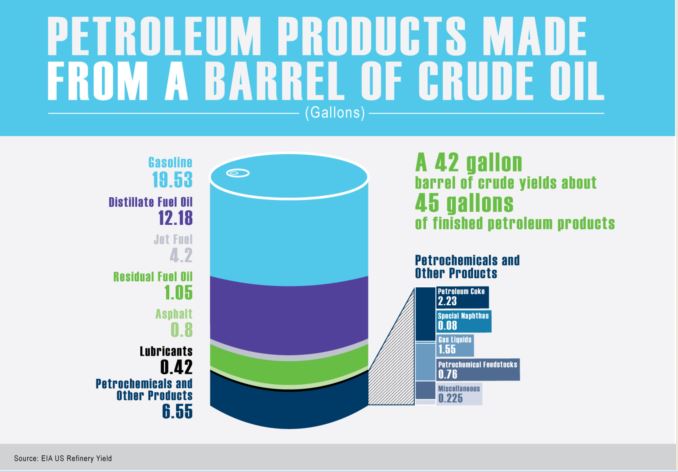
Each barrel of oil that enters a refinery contains the makings for a range of fuels, the prominent one being gasoline. A certain amount is refined as high sulfur fuel and also asphalt, at the bottom of the barrel. There is the middle of the barrel, which provides the lower sulfur distillates — diesel, jet fuel and heating oil. Gasoline and lighter fuels are at the top. Kedzie said the marine fuel is from that middle tier, and could also be made by blending a higher sulfur fuel with diesel.

"There's a school of thought that thinks the new shipping rules will trigger a Y2K, and there's a school of thought that thinks it will cause the next Apocalypse. I'm leaning toward quite a bit of disruption and impact on prices. It's really going to have an impact on the vessels and what they have to use," said Kloza. "For diesel, I think it's going to mean that diesel prices on the coasts of the United States are going to be significantly higher than they are on the interior."
Sulfur emissions from ships are currently very high, and Kloza said one study showed the annual emissions from one large container ship was comparable to the emissions from 10 to 15 million cars running on diesel fuel.

"On the diesel side, I think it's clear it's got to prop up diesel prices so there's the potential possibility of a spike in diesel prices next winter, and heating oil," said Kloza. "You're talking about rolling out a new marine fuel right in the winter of the northern hemisphere." He added, "If that market for marine fuel is high enough, the stuff that normally gets turned into gasoline and on road diesel is going to go to the vessel market."

But Citigroup's Lee and other analysts said there could be a response from President Donald Trump if diesel or other fuels rise very much. The president has periodically lambasted OPEC for high oil prices, including in a tweet on Monday that knocked the price of crude down by three percent.

"If you have this combination of a pick up in diesel prices, gasoline prices and shipping costs are higher, freight costs are higher and that filters through to other commodities. It's the kind of thing the White House might be inclined to delay or push back on," said Lee. "There will be some headline risk out of the White House, there could be other tweets that push us back late this year, early next year, as it's an election year."

While Trump could allow lax enforcement of the new regulations, ships traveling the world would still have to be in compliance if they wish to stop in other ports outside of the U.S. that are enforcing the new regulations. Analysts expect about 15 percent of the ships on the high seas to be non-compliant.

Refining industry can help

If fuel prices rise too much, the refining industry could be self-policing, and move quickly to provide more fuel. "My thing is the refining industry has a good track record of averting disaster. While it is concerning, I wouldn't panic over it. There's no greater incentive to race more production than if prices skyrocket," said John Kilduff, partner with Again Capital.

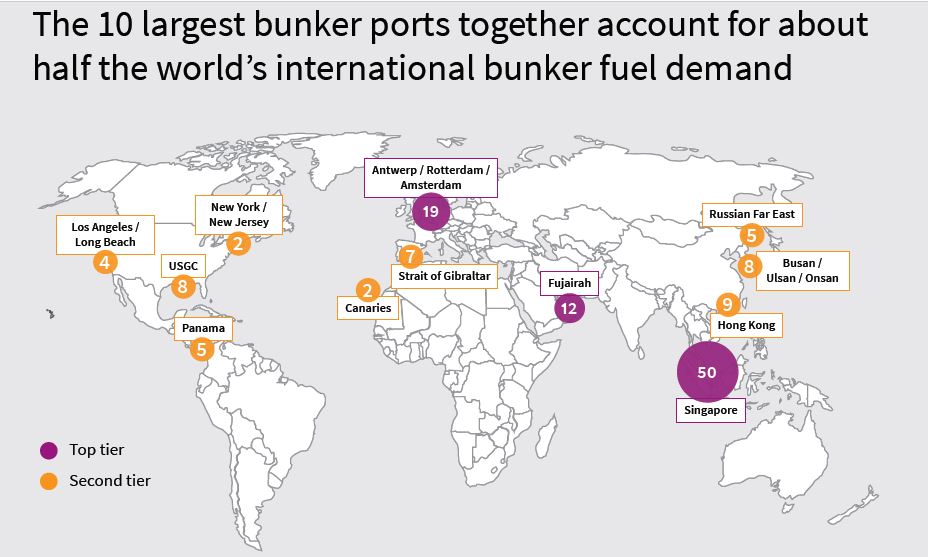
The concern is that the rule change is global, and the U.S. is far from the largest user of high sulfur fuel with Singapore and Rotterdam being major bunker ports. "You're going to have a lot of folks competing for a fixed asset, and it's a global market," said American Trucking Association official Kedzie. "Just because it might be refined here doesn't mean it has to be used here. There's no law that says any crude that's pumped in this country or any product that's refined in a U.S. refinery has to stay in the United States."

The Coalition for American Energy Security said it believes the rule change provides a big opportunity for U.S. refined product exports and that recent analyses show the U.S. industry is on track to meet demand.

"IMO 2020 presents an enormous economic opportunity for the U.S. energy industry and its workers to supply low-sulfur fuels to the global market. These standards give the U.S. a significant advantage over foreign oil producers whose nations haven't made necessary infrastructure investments," a spokesman said.

Ultimately, the markets should calm down, but it's difficult to tell just how much volatility there will be and how high prices could go, with the price of crude a major mitigating factor. Joswick said the heavy sulfur fuel is from about 3 percent of the world's oil output.

IHS Markit's Barrow estimates that perhaps 600,000 barrels a day of the higher sulfur fuel will continued to be used by ships with scrubbers. "Ships can either buy this new fuel which is more expensive or they could spend a few million dollars of capital to install a scrubber. We've seen a significant increase in orders and installation of scrubbers starting in 2018," he said.

"Another 400,000 or 500,000 [barrels of bunker fuel] could be in noncompliance....Our analysis says some of the ships coming out of the ship yards will be designed with more efficient engines that use the new fuel," he said. "Some in certain kinds of trade, particularly container vessels, those are in the future going to use LNG. Some cruise ships have put on scrubbers."

Carnival, for one, said it already has scrubbers on most of its ships, and it has plans to add 11 LNG ships to its fleet over the next five years. "The Advanced Air Quality Systems (generically known as exhaust gas cleaning systems, or scrubbers) are installed on 71 of the company's more than 100 ships and, through extensive independent testing, the systems have proven capable of outperforming low-sulfur fuel alternatives such as marine gasoil (MGO) in terms of cleaner air emissions with essentially no negative environmental impact to oceans and seas," a spokesman said in an email.
Randal Mullett, transportation industry consultant with Mullett Strategies, said shippers will find ways to save on fuel costs.

"They've indicated they're anticipating huge increases in their costs, and perhaps there are some other implications, like they revert to slow steaming to save fuel. That has big implications on supply chain," he said, noting cargoes could arrive days later than normal if ships slow their travel speed.

Some analysts say the cost to shippers could rise by a third or more if they have to switch from high sulfur fuel to low sulfur fuel.

Joswick said he expects U.S. refiners to easily handle the increase in marine fuel.

"Refineries have a certain amount of flexibility and they respond to price. They all run their models to simulate how they can get the best margins," he said. "U.S. refiners are very well positioned to do this. Refineries in Europe will be more challenged. The effect of this is price has to move [higher] for this to happen."

Lee said the complex refiners along the Gulf Coast will benefit from the fuel change and they can easily respond to the demand. "The U.S. is very well positioned," he said.

He said the adjustment period for the transportation industry could last a few years.

"By 2022, into 2023, prices will have normalized and there's a new mix of fuel use in the shipping sector. On day one, diesel demand jumps and high sulfur fuel demand drops significantly," Lee said. "Scrubbers are being installed and refiners are building more capacity. They aren't doing it all on day one. It's more a slow progression."

Sunday, February 24, 2019

Top Warren Buffett Stocks To Buy Right Now

tags:RENX,CACC,HR,PSF,NRZ,

Our favorite holding period is forever. -- Warren Buffett

Forever is an awfully long time. Heck, the average holding period for stocks isn't even one year anymore, since the advent of online trading, computer-driven high-speed trading, and steadily falling brokerage costs. But even with so much of a shift toward short-term trading, the most-effective way for individual investors to get the best returns remains the simplest: Buy great companies and hold them as long as possible. 

Owning stocks that pay a dividend can make it much easier to hold on to them, particularly if they have the ability to steadily increase the payout and solid prospects to grow the business. To help find the best long-term dividend stocks out there, we asked three of our Motley Fool investors for a little help. They came back with Gaming and Leisure Properties Inc (NASDAQ:GLPI), AES Corp (NYSE:AES), and Caretrust REIT Inc (NASDAQ:CTRE). 

Image source: Getty Images.

Top Warren Buffett Stocks To Buy Right Now: RELX N.V.(RENX)

Advisors' Opinion:
  • [By Stephan Byrd]

    Relx (NYSE:RENX) was upgraded by research analysts at Barclays to a “buy” rating in a report released on Monday.

    RENX has been the subject of several other research reports. Zacks Investment Research raised shares of Relx from a “sell” rating to a “hold” rating in a report on Thursday, August 16th. UBS Group cut shares of Relx from a “neutral” rating to a “sell” rating in a research note on Thursday, June 14th. Two investment analysts have rated the stock with a sell rating and three have given a buy rating to the company. The stock presently has an average rating of “Hold” and a consensus target price of $23.00.

  • [By Stephan Byrd]

    Get a free copy of the Zacks research report on Relx (RENX)

    For more information about research offerings from Zacks Investment Research, visit Zacks.com

Top Warren Buffett Stocks To Buy Right Now: Credit Acceptance Corporation(CACC)

Advisors' Opinion:
  • [By Stephan Byrd]

    Credit Acceptance (NASDAQ:CACC) last posted its quarterly earnings results on Tuesday, July 31st. The credit services provider reported $6.95 EPS for the quarter, topping the consensus estimate of $6.44 by $0.51. The business had revenue of $315.40 million during the quarter, compared to analysts’ expectations of $303.55 million. Credit Acceptance had a net margin of 46.43% and a return on equity of 28.97%. analysts anticipate that Credit Acceptance Corp. will post 27.68 earnings per share for the current year.

  • [By Logan Wallace]

    Credit Acceptance (NASDAQ:CACC) last posted its earnings results on Thursday, May 3rd. The credit services provider reported $6.11 earnings per share for the quarter, missing the Zacks’ consensus estimate of $6.19 by ($0.08). The company had revenue of $295.60 million for the quarter, compared to analysts’ expectations of $296.16 million. Credit Acceptance had a net margin of 43.49% and a return on equity of 29.44%. The firm’s quarterly revenue was up 12.5% compared to the same quarter last year. During the same period in the previous year, the firm earned $4.67 EPS. equities research analysts anticipate that Credit Acceptance will post 26.04 EPS for the current fiscal year.

  • [By Shane Hupp]

    Shares of Credit Acceptance Corp. (NASDAQ:CACC) have been assigned an average recommendation of “Hold” from the twelve research firms that are covering the stock, MarketBeat reports. Four equities research analysts have rated the stock with a sell rating, four have issued a hold rating, three have assigned a buy rating and one has given a strong buy rating to the company. The average twelve-month price target among brokers that have issued ratings on the stock in the last year is $335.00.

Top Warren Buffett Stocks To Buy Right Now: Healthcare Realty Trust Incorporated(HR)

Advisors' Opinion:
  • [By Shane Hupp]

    New Mexico Educational Retirement Board lessened its holdings in Healthcare Realty Trust Inc (NYSE:HR) by 14.8% during the 2nd quarter, according to its most recent Form 13F filing with the SEC. The fund owned 29,300 shares of the real estate investment trust’s stock after selling 5,100 shares during the period. New Mexico Educational Retirement Board’s holdings in Healthcare Realty Trust were worth $852,000 at the end of the most recent quarter.

  • [By Joseph Griffin]

    Schwab Charles Investment Management Inc. lifted its position in shares of Healthcare Realty Trust Incorporated (NYSE:HR) by 6.4% during the 1st quarter, according to its most recent filing with the Securities and Exchange Commission (SEC). The institutional investor owned 1,785,099 shares of the real estate investment trust’s stock after acquiring an additional 107,342 shares during the quarter. Schwab Charles Investment Management Inc.’s holdings in Healthcare Realty Trust were worth $49,466,000 at the end of the most recent quarter.

  • [By Shane Hupp]

    Get a free copy of the Zacks research report on Healthcare Realty Trust (HR)

    For more information about research offerings from Zacks Investment Research, visit Zacks.com

Top Warren Buffett Stocks To Buy Right Now: Cohen & Steers Select Preferred and Income Fund, Inc.(PSF)

Advisors' Opinion:
  • [By Max Byerly]

    Media stories about Cohen & Steers Select Pref & Inc Fd (NYSE:PSF) have trended positive recently, according to Accern Sentiment. The research firm ranks the sentiment of press coverage by reviewing more than 20 million news and blog sources in real time. Accern ranks coverage of publicly-traded companies on a scale of negative one to positive one, with scores closest to one being the most favorable. Cohen & Steers Select Pref & Inc Fd earned a media sentiment score of 0.39 on Accern’s scale. Accern also gave headlines about the company an impact score of 48.661768322942 out of 100, meaning that recent press coverage is somewhat unlikely to have an effect on the stock’s share price in the near future.

Top Warren Buffett Stocks To Buy Right Now: New Residential Investment Corp.(NRZ)

Advisors' Opinion:
  • [By Stephan Byrd]

    Shares of New Residential Investment Corp (NYSE:NRZ) have been given an average recommendation of “Buy” by the ten analysts that are presently covering the stock, MarketBeat reports. Two equities research analysts have rated the stock with a hold rating, seven have given a buy rating and one has given a strong buy rating to the company. The average twelve-month price objective among analysts that have issued ratings on the stock in the last year is $18.87.

  • [By Max Byerly]

    Here are some of the media stories that may have impacted Accern’s analysis:

    Get New Residential Investment alerts: On your bad day this might appear as a lifeline: New Residential Investment Corp. (NRZ) (fintelegraph.com) EPS Evaluation – New Residential Investment Corp (NYSE: NRZ) (stocksmarketcap.com) Active Stock Evaluation – New Residential Investment Corp. (NYSE: NRZ) (financerater.com) New Residential Investment Corp. (NRZ): Technical Indicators: (stockquote.review) What Do Analysts’ Recommend? – New Residential Investment Corp. (NYSE:NRZ) (nasdaqjournal.com)

    Shares of New Residential Investment opened at $18.10 on Monday, Marketbeat.com reports. New Residential Investment has a 1-year low of $15.04 and a 1-year high of $18.43. The stock has a market cap of $6.08 billion, a price-to-earnings ratio of 6.40 and a beta of 0.90.

  • [By Ethan Ryder]

    Natixis Advisors L.P. reduced its position in shares of New Residential Investment Corp (NYSE:NRZ) by 23.2% in the 1st quarter, according to its most recent filing with the Securities and Exchange Commission. The fund owned 235,486 shares of the real estate investment trust’s stock after selling 71,224 shares during the quarter. Natixis Advisors L.P. owned about 0.07% of New Residential Investment worth $3,874,000 as of its most recent filing with the Securities and Exchange Commission.

  • [By Joseph Griffin]

    New Residential Investment (NYSE: NRZ) and Paramount Group (NYSE:PGRE) are both mid-cap finance companies, but which is the superior investment? We will contrast the two companies based on the strength of their earnings, profitability, analyst recommendations, dividends, institutional ownership, valuation and risk.

  • [By Joseph Griffin]

    Royal Bank of Canada boosted its stake in shares of New Residential Investment Corp (NYSE:NRZ) by 144.9% in the first quarter, HoldingsChannel reports. The institutional investor owned 831,287 shares of the real estate investment trust’s stock after purchasing an additional 491,807 shares during the period. Royal Bank of Canada’s holdings in New Residential Investment were worth $13,675,000 at the end of the most recent quarter.

Thursday, February 21, 2019

Why Alphabet and salesforce.com Bought a Piece of GoCardless

For a couple of giants like Alphabet (NASDAQ:GOOGL) (NASDAQ:GOOG) and salesforce.com (NYSE:CRM), $75 million is pocket change. But that doesn't mean they aren't thoughtful about where they invest, so if they shelled that sum out for a stake in the U.K. start-up GoCardless, assume smart folks gave it some thought. GoCardless, a fintech start-up that lets its clients collect recurring payments from online customers via automated direct debit, will use this capital infusion to help fund its U.S. and international expansion.

In this segment from MarketFoolery, host Mac Greer and senior analysts Ron Gross and Jason Moser talk about where the company fits in the ongoing "war on cash" narrative, how big its opportunity could be, and why the big guys would want a piece of that action.

A full transcript follows the video.

This video was recorded on Feb. 19, 2019.

Mac Greer: Let's turn to the war on cash. Jason Moser, I know this is one of your favorite topics. Alphabet and Salesforce are investing $75 million in a U.K. online payments start-up, GoCardless. Jason, this investment will help GoCardless expand to the U.S. What's going on here?

Jason Moser: First and foremost, this is a drop in the bucket for Alphabet and Salesforce. This is just a rounding error for them. It makes a lot of sense for them to try to invest a little bit in the space to participate because clearly, we've seen this move toward a cashless society, not only on the consumer side but on the commercial side as well. That's what GoCardless does.

GoCardless is working in a specific niche. They're working with businesses and recurring payments. If you're a business with a recurring payment, perhaps it's a subscription or some type of bill that you're paying. They're working with those businesses to get more a part of that market. From the consumer side, for an analogy, let's just liken it to, you have your mortgage payment direct debited from your checking account every month. I'd love to be able to put my mortgage on my credit card every month because it'd be free points.

Ron Gross: Yeah, that'd be great.

Moser: But, we can't do that. So, next logical thing is to have your bank go ahead and withdraw that money on behalf of the mortgage company. Essentially, GoCardless is working in that realm. And it's a very lucrative market. When you look at business-to-business opportunity, Mastercard was recently quoted on their call calling that opportunity, the dollars that flow through that business-to-business network on a global basis -- I'm going to give you a guess, Mac. How big do you think that number is? Wild guess.

Greer: It's in the billions.

Moser: Technically.

Greer: It's in the multiple billions.

Moser: $125 trillion.

Greer: Oh, my gosh!

Moser: Now, I'm talking about the money that flows through all of those networks. When you look domestically, you're looking at about a $25 trillion dollar network. That's why they're trying to play into that market. Even just capturing a small slice of it is meaningful for a company like GoCardless. So, working on those recurring payments as a direct debit vs. making a car payment, there are puts and takes for either way you do it. But, I think in a lot of cases with businesses that are looking to have a recurring, predictable payment taken out from their account, this is just an easy way to do it.

Wednesday, February 20, 2019

Hot Energy Stocks To Watch For 2019

tags:NBR,REC,BTE,TGC,MCF,

You've worked hard for your money, and now you'd like to protect it. But you'd also like to generate a solid -- and ideally, growing -- stream of income from your investment portfolio, one that can give you the freedom you deserve in retirement.

Fortunately, there are a select few businesses that can help you do just that. Read on to learn about one of the best income investments available in the market today.

Searching for yield? Then check out this company. Image source: Getty Images.

Brookfield Infrastructure Partners L.P. (NYSE:BIP) is one of the largest infrastructure companies in the world, with a broad and diverse collection of high-quality assets spanning five continents.

Brookfield operates in four main segments: utilities, transportation, energy, and communications infrastructure -- think electricity distribution lines, toll roads, pipelines, and cell towers.

Hot Energy Stocks To Watch For 2019: Nabors Industries Ltd.(NBR)

Advisors' Opinion:
  • [By Logan Wallace]

    Nabors Industries Ltd. (NYSE:NBR) has been assigned an average recommendation of “Buy” from the twenty-one research firms that are currently covering the stock, Marketbeat Ratings reports. Two investment analysts have rated the stock with a sell rating, five have assigned a hold rating and fourteen have given a buy rating to the company. The average 12-month target price among brokers that have covered the stock in the last year is $9.18.

  • [By Dan Caplinger]

    The stock market had a mildly positive day on Friday, and gains of between 0.1% and 0.3% were common for most of the major benchmark indexes. Without any outright hostility among leaders of the G-7 nations in their summit in Canada's Quebec City, investors seemed content to go into the weekend with confidence in the prospects for the U.S. economy and its biggest businesses. Yet some individual companies had bad news that held their shares back from participating in the rally. Nabors Industries (NYSE:NBR), PolarityTE (NASDAQ:COOL), and Evolus (NASDAQ:EOLS) were among the worst performers on the day. Here's why they did so poorly.

  • [By Logan Wallace]

    Niobio Cash (CURRENCY:NBR) traded 7.5% lower against the US dollar during the 24-hour period ending at 20:00 PM E.T. on August 22nd. Niobio Cash has a market cap of $190,704.00 and approximately $242.00 worth of Niobio Cash was traded on exchanges in the last 24 hours. One Niobio Cash coin can now be purchased for about $0.0018 or 0.00000028 BTC on major cryptocurrency exchanges including TradeOgre and Crex24. During the last seven days, Niobio Cash has traded up 11.4% against the US dollar.

  • [By Shane Hupp]

    Nabors Industries (NYSE:NBR) received a $12.00 price target from analysts at Royal Bank of Canada in a report issued on Thursday. The firm currently has a “buy” rating on the oil and gas company’s stock. Royal Bank of Canada’s target price suggests a potential upside of 92.31% from the stock’s previous close.

Hot Energy Stocks To Watch For 2019: REC Silicon ASA (REC)

Advisors' Opinion:
  • [By Logan Wallace]

    Regalcoin (CURRENCY:REC) traded up 10.1% against the US dollar during the 1 day period ending at 22:00 PM E.T. on February 7th. One Regalcoin coin can now be purchased for about $0.0047 or 0.00000139 BTC on popular exchanges including YoBit, CoinExchange and BTC-Alpha. Regalcoin has a total market capitalization of $60,267.00 and $9.00 worth of Regalcoin was traded on exchanges in the last day. During the last week, Regalcoin has traded down 2.2% against the US dollar.

  • [By Logan Wallace]

    Regalcoin (CURRENCY:REC) traded up 5.2% against the U.S. dollar during the 1 day period ending at 19:00 PM E.T. on May 27th. Regalcoin has a total market cap of $496,466.00 and $1,256.00 worth of Regalcoin was traded on exchanges in the last day. During the last week, Regalcoin has traded 1.9% higher against the U.S. dollar. One Regalcoin coin can currently be purchased for about $0.0388 or 0.00000529 BTC on cryptocurrency exchanges including BTC-Alpha, CoinExchange and YoBit.

  • [By Shane Hupp]

    Regalcoin (REC) is a PoW/PoS coin that uses the
    X11 hashing algorithm. Its launch date was September 28th, 2017. Regalcoin’s total supply is 16,491,413 coins and its circulating supply is 12,799,009 coins. The Reddit community for Regalcoin is /r/RegalCoin and the currency’s Github account can be viewed here. Regalcoin’s official Twitter account is @regalcoinx and its Facebook page is accessible here. The official website for Regalcoin is regalcoin.co.

Hot Energy Stocks To Watch For 2019: Baytex Energy Corp(BTE)

Advisors' Opinion:
  • [By Shane Hupp]

    Baytex Energy (NYSE: BTE) and Diamond Offshore Drilling (NYSE:DO) are both oils/energy companies, but which is the superior business? We will compare the two businesses based on the strength of their profitability, dividends, institutional ownership, analyst recommendations, valuation, earnings and risk.

  • [By Dan Caplinger]

    Wall Street continued its downward streak on Monday, with the Dow Jones Industrial Average falling more than 100 points. Most major benchmarks fell more modestly, with a few actually poking into positive territory on the day. Trade-sensitive stocks were among the weakest as investors focused on uncertainty related to tariff disputes between the U.S. and China. But for some other companies, bad news of a different sort was responsible for the drops in their shares. Biogen (NASDAQ:BIIB), Baytex Energy (NYSE:BTE), and Catalyst Biosciences (NASDAQ:CBIO) were among the worst performers on the day. Here's why they did so poorly.

  • [By Shane Hupp]

    BitSerial (CURRENCY:BTE) traded 4.5% lower against the US dollar during the 1-day period ending at 17:00 PM E.T. on May 27th. During the last seven days, BitSerial has traded down 22.8% against the US dollar. One BitSerial token can now be bought for about $0.0038 or 0.00000052 BTC on major exchanges. BitSerial has a total market capitalization of $0.00 and $37.00 worth of BitSerial was traded on exchanges in the last day.

  • [By Logan Wallace]

    Baytex Energy (NYSE:BTE) (TSE:BTE) last announced its quarterly earnings data on Thursday, May 3rd. The oil and gas producer reported ($0.21) earnings per share for the quarter, missing the consensus estimate of ($0.13) by ($0.08). Baytex Energy had a negative return on equity of 4.74% and a net margin of 4.57%. The firm had revenue of $226.37 million during the quarter. sell-side analysts expect that Baytex Energy Corp will post -0.28 earnings per share for the current year.

  • [By Ethan Ryder]

    Get a free copy of the Zacks research report on Baytex Energy (BTE)

    For more information about research offerings from Zacks Investment Research, visit Zacks.com

  • [By Logan Wallace]

    Shares of Baytex Energy Corp (NYSE:BTE) (TSE:BTE) have been assigned a consensus rating of “Buy” from the twelve ratings firms that are currently covering the stock, MarketBeat.com reports. Two equities research analysts have rated the stock with a sell rating, one has assigned a hold rating and nine have assigned a buy rating to the company. The average 12 month target price among analysts that have issued a report on the stock in the last year is $4.00.

Hot Energy Stocks To Watch For 2019: Tengasco, Inc.(TGC)

Advisors' Opinion:
  • [By Stephan Byrd]

    Tigercoin (CURRENCY:TGC) traded down 3.5% against the dollar during the 24 hour period ending at 7:00 AM E.T. on August 23rd. During the last seven days, Tigercoin has traded 8.4% lower against the dollar. Tigercoin has a total market capitalization of $98,130.00 and approximately $0.00 worth of Tigercoin was traded on exchanges in the last 24 hours. One Tigercoin coin can now be purchased for about $0.0023 or 0.00000035 BTC on popular exchanges.

  • [By Logan Wallace]

    Tigercoin (TGC) is a proof-of-work (PoW) coin that uses the SHA256 hashing algorithm. It launched on September 6th, 2013. Tigercoin’s total supply is 43,536,800 coins. The official website for Tigercoin is tigercoin.wordpress.com. Tigercoin’s official Twitter account is @TigerCoin.

  • [By Max Byerly]

    Tigercoin (CURRENCY:TGC) traded 12.1% lower against the US dollar during the 1-day period ending at 23:00 PM E.T. on May 6th. One Tigercoin coin can now be bought for $0.0077 or 0.00000083 BTC on popular cryptocurrency exchanges. In the last week, Tigercoin has traded 6.4% lower against the US dollar. Tigercoin has a total market cap of $334,680.00 and approximately $64.00 worth of Tigercoin was traded on exchanges in the last 24 hours.

  • [By Logan Wallace]

    Tigercoin (CURRENCY:TGC) traded flat against the dollar during the 24-hour period ending at 18:00 PM ET on October 5th. Tigercoin has a market cap of $103,538.00 and approximately $3.00 worth of Tigercoin was traded on exchanges in the last 24 hours. One Tigercoin coin can now be purchased for about $0.0024 or 0.00000036 BTC on major exchanges. Over the last week, Tigercoin has traded 12.4% lower against the dollar.

Hot Energy Stocks To Watch For 2019: Contango Oil & Gas Company(MCF)

Advisors' Opinion:
  • [By Ethan Ryder]

    Fmr LLC increased its position in shares of Contango Oil & Gas (NYSEAMERICAN:MCF) by 33.5% during the second quarter, according to the company in its most recent disclosure with the Securities & Exchange Commission. The institutional investor owned 3,583,039 shares of the oil and natural gas company’s stock after buying an additional 899,900 shares during the quarter. Fmr LLC owned 13.93% of Contango Oil & Gas worth $20,352,000 at the end of the most recent quarter.

  • [By Stephan Byrd]

    COPYRIGHT VIOLATION NOTICE: “Contango Oil & Gas (MCF) Short Interest Update” was originally published by Ticker Report and is owned by of Ticker Report. If you are reading this article on another site, it was copied illegally and republished in violation of US and international copyright & trademark laws. The correct version of this article can be read at https://www.tickerreport.com/banking-finance/3346537/contango-oil-gas-mcf-short-interest-update.html.

  • [By Joseph Griffin]

    Fondren Management LP purchased a new position in shares of Contango Oil & Gas (NYSEAMERICAN:MCF) in the 2nd quarter, according to the company in its most recent filing with the SEC. The institutional investor purchased 60,000 shares of the oil and natural gas company’s stock, valued at approximately $341,000. Fondren Management LP owned 0.23% of Contango Oil & Gas as of its most recent filing with the SEC.